Obróbka szkła
- Glass Batches
- Lime & Potash
- Glassworking Tools
- Blowpipe
- Paddle
- Jacks
- Gem Saw
- Glassworking Steps
- Table Pour
- Basin Pour
- Glass Coloring
- Dye List
Wprowadzenie
Glassworking is the process of turning sand into glass. To start, you must create a Glass Batch, of which there are four types:
1. Silica, from white sand.
2. Hematitic, from yellow, red, or pink sand.
3. Olivine, from green or brown sand.
4. Volcanic, from black sand.
Partia szkła krzemionkowego
Glass batches can then be crafted using one of the aforementioned colors of sand, plus Lime and a type of Potash.
Remember that different sand types can be obtained by breaking gravel with a hammer.
Soda Ash or Saltpeter can be used as a source of Potash. Soda ash is a powder made from heating Dried Seaweed or Kelp.
Lime is produced by heating Flux.
Narzędzia pracy
Glassworking is done by starting with a glass batch, and then completing a series of steps. These steps may require specific tools:
- A Blowpipe, to Blow and Stretch.
- A Paddle, to Flatten.
- Jacks, to Pinch.
- A Gem Saw, to Saw.
- And a Wool Cloth, to Roll.
Dmuchawa
Dmuchawa
Dmuchawa
The most important tool is the Blowpipe. An Unfired Ceramic Blowpipe can be knapped from clay, and then fired into a Ceramic Blowpipe.
However, ceramic blowpipes are brittle, and have a chance to break when used. An invulnerable Blowpipe can be Worked from a Brass Rod on an anvil.
Łopatka
Operację rozpłaszczania można wykonać łopatką, którą tworzy się z drewna.
Operację ściśnięcia wykonuje się zaciskiem, wytwarzanym przez spawanie mosiężnego pręta z mosiężną płytką.
Piła do klejnotów
The Saw operation can be done with a Gem Saw. The gem saw is also used to break both Glass Blocks and Glass Panes to obtain them.
Jak wytwarzać szkło
First, glass on the blowpipe must be heated to at least Faint Red. Then, hold the blowpipe in your offhand and hold Right Click to perform each step.
Use F to pick up a hot blowpipe into your offhand.
Blow
Use the Blowpipe while facing straight ahead.
Stretch
Use the Blowpipe while facing straight down.
Flatten
Use the Blowpipe while holding a Paddle in your main hand.
Pinch
Use the Blowpipe while holding Jacks in your main hand.
Saw
Use the Blowpipe while holding a Gem Saw in your main hand.
Roll
Use the Blowpipe with a Wool Cloth in your main hand.
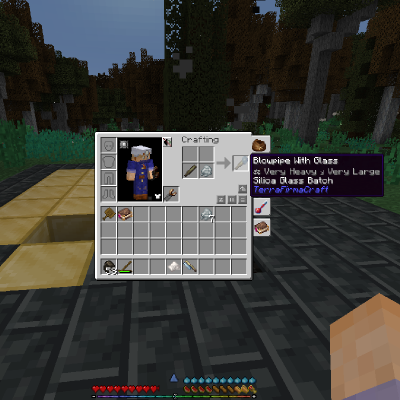
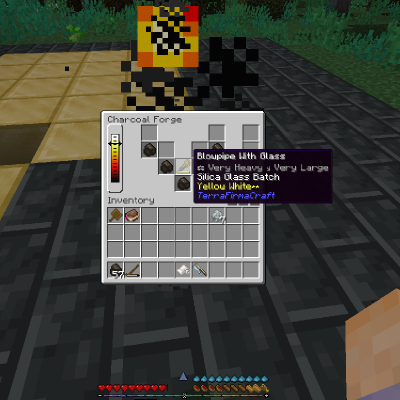
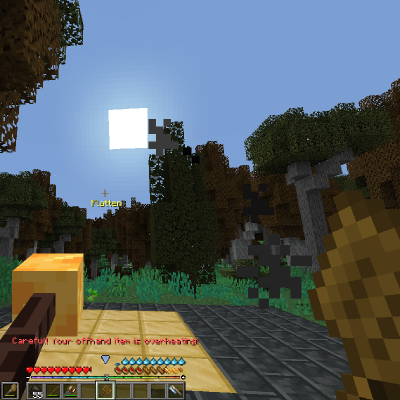
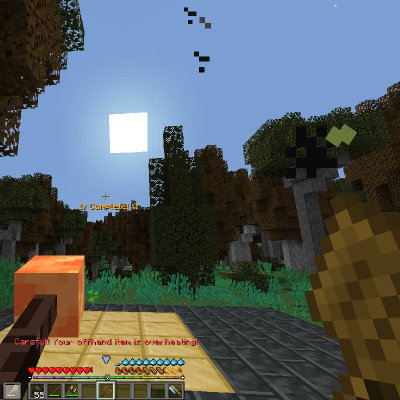
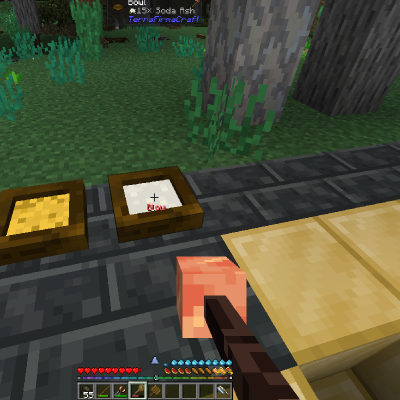
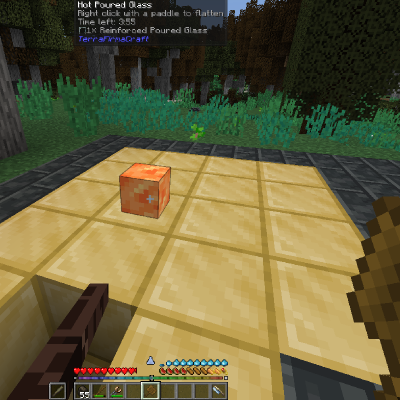
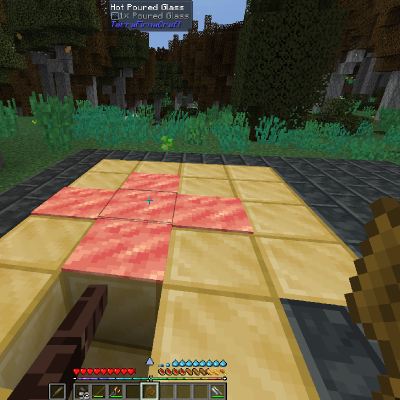
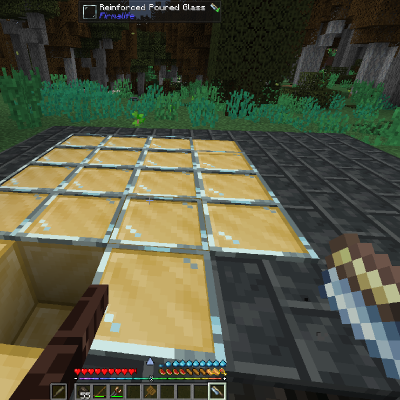
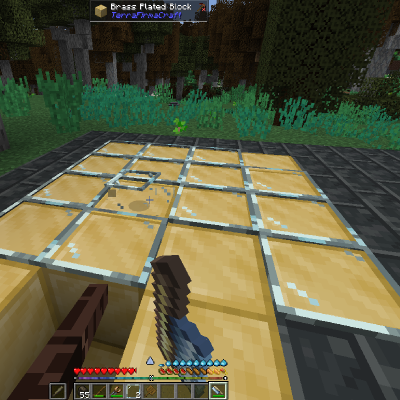
Samouczek obrazkowy: Wytwarzanie wzmocnionych szyb krok po kroku.
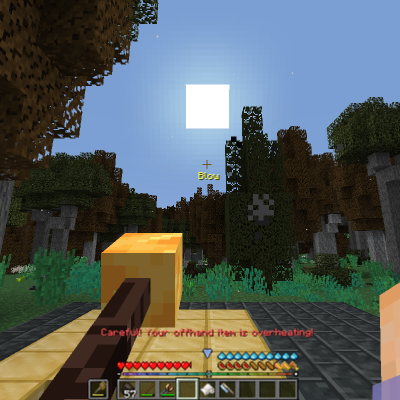
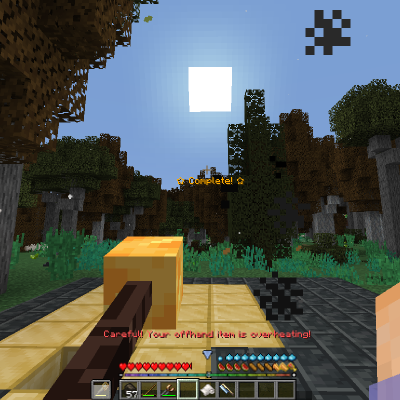
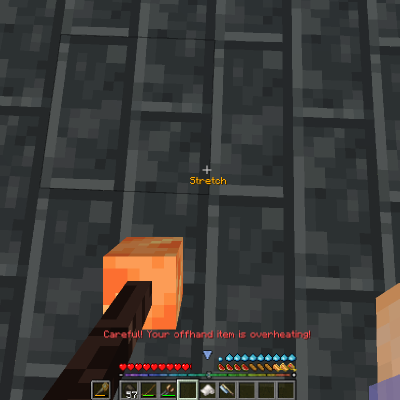
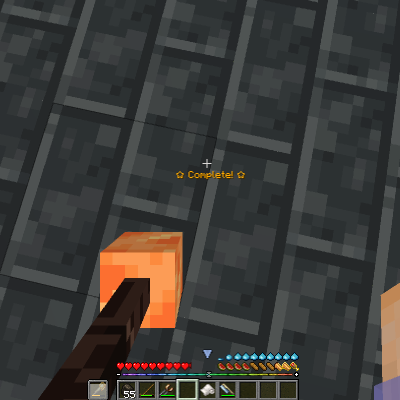
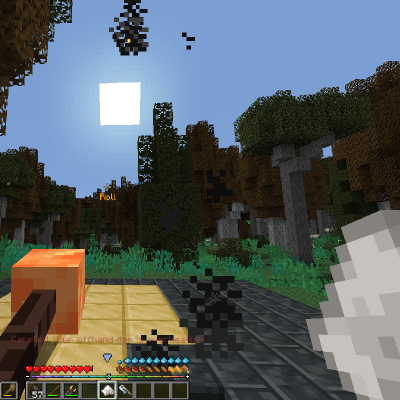
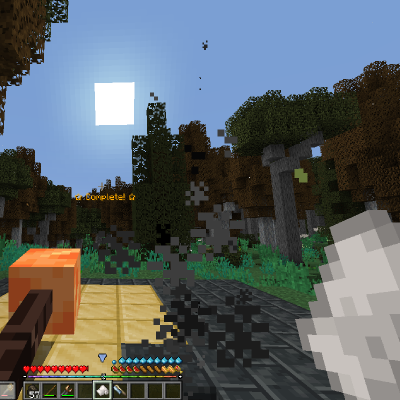
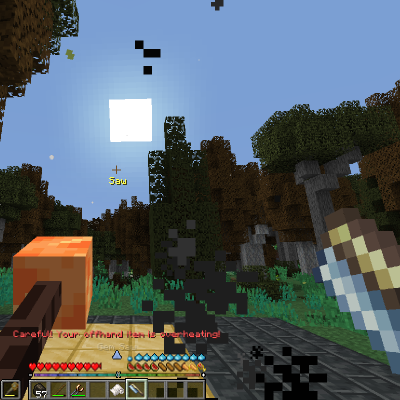
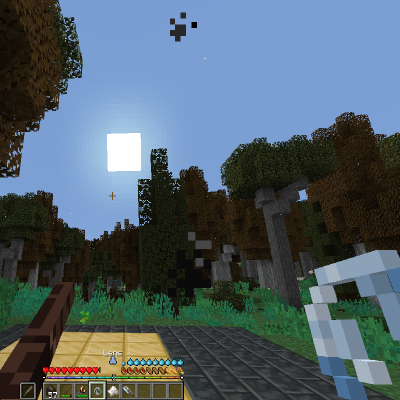
Samouczek obrazkowy: Tworzenie soczewki, krok po kroku
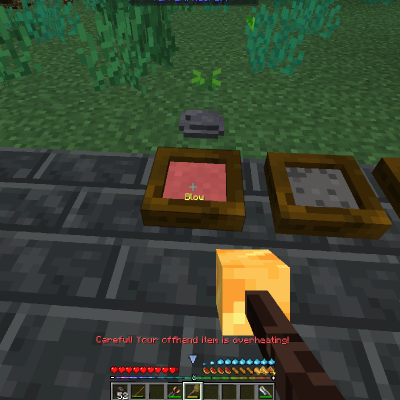
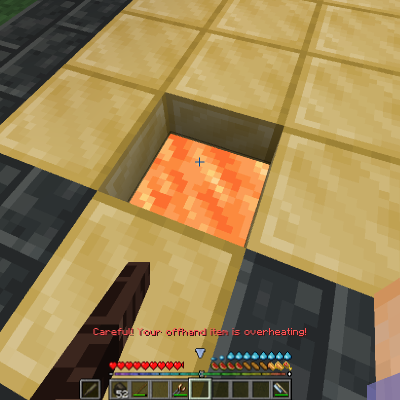
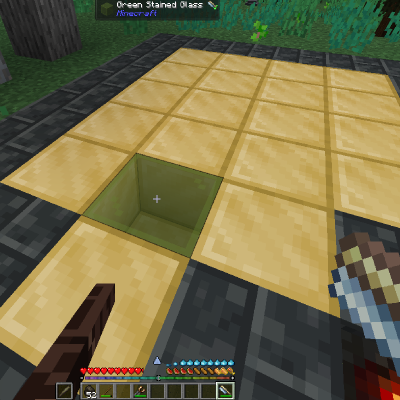
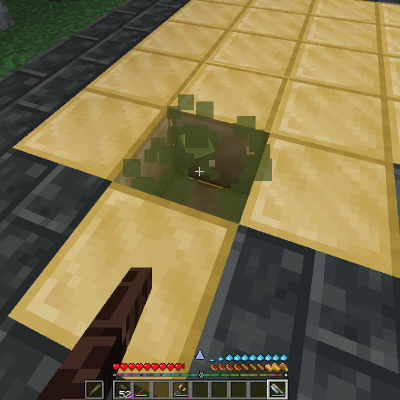
Samouczek obrazkowy: Tworzenie zielonego barwionego szkła, krok po kroku
Wylewanie szkła na stół
Glass Panes are made with a Table Pour. A pouring table is made by placing up to sixteen Kaolin Clay Blocks or Brass Plated Blocks in a continuous area.
1. Add a Glass Batch to a Blowpipe.
2. Heat the blowpipe to Faint Red.
3. Right Click the Blowpipe on the top of the table.
4. Finally, Right Click with a Paddle to flatten the glass.
Gdy szkło wystygnie, można je zebrać za pomocą piły do klejnotów.
Wylewanie szkła do formy
Glass Blocks are made with a Basin Pour. A basin is made by surrounding all sides of an air block except the top with Kaolin Clay Blocks or Brass Plated Blocks.
1. Add a Glass Batch to a Blowpipe.
2. Heat the blowpipe to Faint Red.
3. Right Click the Blowpipe on the top of the table.
Gdy szkło wystygnie, można je zebrać za pomocą piły do klejnotów.
Bloki do obróbki szkła
Barwienie szkła
Glass has a natural color based on the type of Glass Batch that was used. Other colors can be made using a Bowl.
To use, place the Bowl on the ground, then Right Click the required Powder. Before Pouring, use the Blowpipe on the bowl to add the powder to the batch.
Kolory barwników
- Białe: szkło krzemionkowe lub hematytowe + soda kalcynowana
- Czarne: dowolne + sproszkowany grafit
- Szare: dowolne + sproszkowany grafit + soda kalcynowana
- Jasnoszare: dowolne + sproszkowany grafit + 2× soda kalcynowana
- Fioletowe: dowolne + żelazo + miedź
- Brązowe: dowolne + nikiel
- Jasnoniebieskie: szkło niewulkaniczne + miedź + szafir
- Zielone: szkło krzemionkowe lub hematytowe + żelazo
- Jasnozielone: szkło krzemionkowe lub hematytowe + żelazo + soda kalcynowana
- Jasnoniebieskie: szkło krzemionkowe + lazuryt
- Niebieskie: szkło krzemionkowe + miedź
- Czerwone: szkło krzemionkowe lub hematytowe + cyna
- Żółte: szkło krzemionkowe lub hematytowe + srebro
- Pomarańczowe: szkło krzemionkowe + piryt
- Purpurowe: szkło krzemionkowe lub hematytowe + rubin
- Różowe: szkło krzemionkowe + złoto
- Przyciemnione: szkło inne niż krzemionkowe + ametyst
Dostępność kolorów szkła
Dostępność kolorów szkła. "C" - przezroczyste, "T" - przyciemniane. Określone kolory mogą być wytwarzane tylko z niektórych typów szkła.
C | T | |||||||||||||||||
|---|---|---|---|---|---|---|---|---|---|---|---|---|---|---|---|---|---|---|
Krzemion. | ||||||||||||||||||
Hemat. | ||||||||||||||||||
Oliwin | ||||||||||||||||||
Wulkaniczne |
Legend
Może być wytworzone
Nie może zostać wytworzone
Domyślny kolor
Comments