Czym są Głębiny?
The Beneath is a network of very deep caves, directly below the Overworld.
This dimension is balanced around mid to late Metallurgy Age.
It's more dangerous than the surface, so we recommend a metal shield and good nutrition as a minimum, but some armor, a water flask, cooling clothes, and a ranged weapon will help a lot.
It differs from the usual Nether experience in a few ways:
- You enter it differently
- Water doesn't instantly evaporate
- A bed works like normal
- Traveling Beneath is no faster than in the Overworld
In return, you can find resources like Kaolin Clay, Graphite, richer and more exposed ore veins, as well as other treasures.
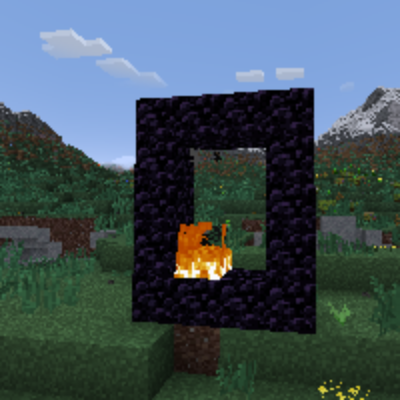
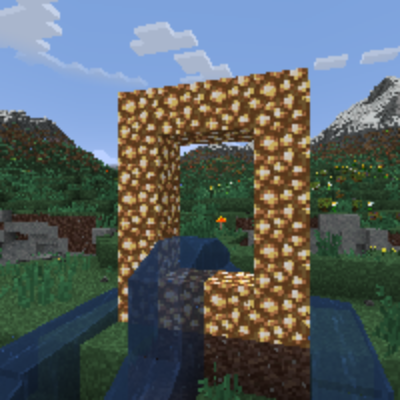
Tak nie rób!
Wejście do Głębin
To travel Beneath, simply find some overworld Bedrock at Y=-58.
To get down to the bedrock, you'll have to either break through the Hornfels layer with Explosives or Steel+ Tools, find a cave with the more brittle Keratophyre, or drain a lava lake.
Note that Primitive Explosives are not strong enough to break Hornfels.
You will appear in the Beneath at the same X and Z coordinates, with a 3x2x3 space opened for you to place some supports if necessary.
A temporary cloud will be provided if there is no floor, as well as short Slow Falling and Fire Protection effects to prevent any accidents.
Wyjście z Głębin
To return, just get up to ceiling bedrock in the same fashion.
It's a good idea to make a note of where you entered, so you can return to the same place in the overworld whenever you're ready to leave.
You will be returned at Y=-54, above any potential lava lakes, inside another 3x2x3 area. The middle two blocks for the player will always be replaced by air, so you may want to avoid placing ladders there.
Biomy
Głębiny pełno nowych biomów do odkrycia!
Głębiny można podzielić na trzy warstwy, z których każda ma własne biomy. Im głębiej schodzisz, tym jest goręcej i niebezpieczniej!
Warstwy
Top Layer
- Salt Caves
- Muggy Bog
- Decaying Caverns
- Webbed Lair
Middle Layer - Tar Pools
- Geothermal Springs
- Thorny Grove
- Lush Hollow
Bottom Layer - Ash Forest
- Lava Floes
- Basalt Deltas
Jaskinie solne
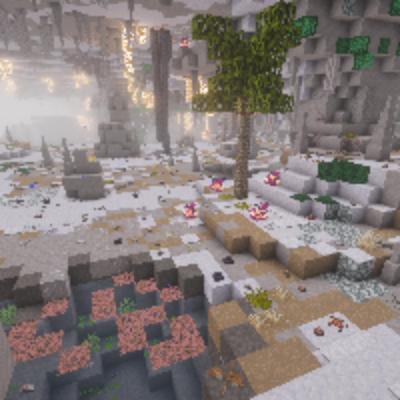
Jak ciepła oceaniczna bryza, ten biom jest pełen halitu. Świetne miejsce na bazę!
Duszne bagno
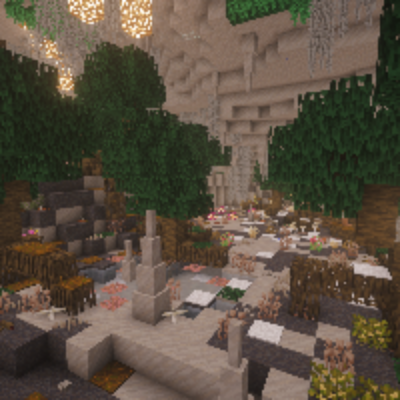
Wilgotny i bagienny. Bezpieczne źródło drewna, jeśli umiesz unikać krokodyli.
Rozpadające się jaskinie

W tym wilgotnym regionie pełnym zgnilizny natura ciężko pracuje nad rozkładem.
Leże pająków

Brak nagród za odgadnięcie co tu żyje! Świetne miejsce do zbierania jedwabiu.
Doły ze smołą
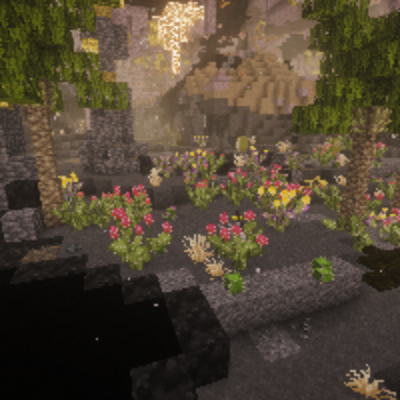
Piaszczysty jak mała pustynia, ten obszar zawiera lepkie doły ze smołą pełne oleju.
Źródła geotermalne
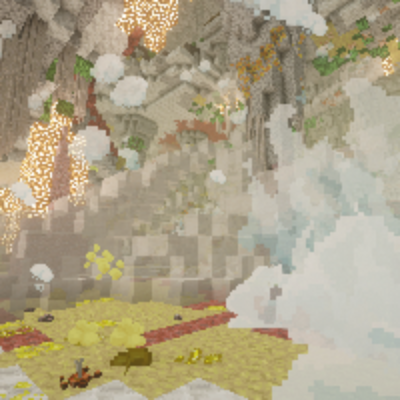
Nie ma tu siarkowych kostek, ale w tym parnym biomie można znaleźć wodę źródlaną, która przydaje się do leczenia.
Cierniowy gaj
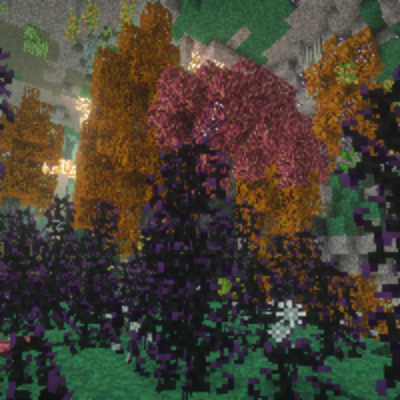
Trudny do podróżowania biom z roślinami, które ranią cię po nadepnięciu. Uważaj!
Bujna jaskinia

Gorąco i pełno zieleni! Gęste paprocie skrywają leżącą pod nimi glinę kaolinową.
Popiołowy las

To, co pozostaje z zieleni po częstych pożarach wywołanych przez upał.
Potoki lawy

Bogaty w rudy piroksenitowy teren, poprzecinany rzekami lawy.
Bazaltowe delty

Twój ulubiony netherowy biom powraca i jest tak samo niebezpieczny do przechodzenia, jak zwykle.
Geologia
Like the overworld, the Beneath has its own set of rock layers. At the very top, you may find Phyllite, Schist, Gneiss, Marble, Slate, Migmatite, and Travertine.
Underneath those, you may find Schist, Gneiss, Tuff, Migmatite, Travertine, and Diorite.
Niżej może być gabro, granit, tuf, dioryt lub migmatyt.
Na niższych poziomach Głębin występuje warstwa złożona wyłącznie z migmatytu, a na samym dole — piroksenit.
Więcej skał
Więcej skał
Więcej skał
Więcej skał
Więcej skał
Więcej skał
Więcej skał
Więcej skał
Inne skały można znaleźć w innych miejscach.
Małe jeziora lawy otacza piroksenit, a kalcyt występuje w zbiornikach wody źródlanej.
Keratofir można znaleźć w całych Głębinach w postaci wysokich, dużych kolumn.
The Geothermal Springs biome contains the exclusive Aragonite and Glauberite, along with more Calcite.
This biome also houses Huge Quartz crystals, which can either be broken with a pickaxe to obtain Smoky Quartz gems of varying quality, or broken with a Gem Saw to obtain the transparent block itself.
Gilsonite, a very dark building block and ingredient of Asphalt, can be found in large quantities in the Tar Pools biome, along with Sandstone.
Finally, Halite can be found in massive quantities in the Salt Caves biome, which can be mined for Halite and Sylvite ores.
Comments